
Know Your Islamic BASICS? FIND OUT NOW 🧪
← Back to Glossary

Shari'ah

·
شَرِيعَة
Sharīʿah · sha-REE-ah

Shari'ah is an Arabic word meaning Islamic divine law guiding moral, social, and legal conduct. It is the framework for living a life in accordance with God's will. Muslims apply Shari'ah in daily decisions and community laws.

TABLE OF CONTENTS
Alternative Spelling:
Sharia / Shari'a / Shariah / Shariah / Shariyah
What is Shari'ah?

  • Shari'ah is an Arabic term derived from the root word shara'a, which means "a path to the water" or "a clear, straight path." In Islamic terminology, Shari'ah refers to the comprehensive system of divine law and moral guidance revealed by Allah to Prophet Muhammad (PBUH), encompassing all aspects of a Muslim’s life.
  • Shari'ah holds profound theological significance as it represents the will of Allah, providing a framework for worship, ethics, and social relations. It is considered the ideal way of life for Muslims, guiding them to fulfill their religious obligations and achieve spiritual success in accordance with the teachings of Prophet Muhammad (PBUH).
  • Shari'ah has been interpreted and applied by Islamic scholars throughout history, forming the foundation of Islamic jurisprudence. While the core principles are derived from the Qur’an and the Sunnah of Prophet Muhammad (PBUH), the understanding and implementation of Shari'ah have evolved across different cultures and eras, reflecting both continuity and diversity within the Muslim world.
  • Shari'ah is not only a set of legal rules but also a spiritual path that nurtures the soul and cultivates moral character. By following Shari'ah, Muslims strive to attain closeness to Allah, develop virtues such as honesty and compassion, and uphold justice and mercy in their daily interactions.
  • Shari'ah continues to influence the lives of Muslims today, guiding personal conduct, family matters, business transactions, and community relations. Its practical application varies across societies, but it remains a vital source of ethical guidance and legal principles for individuals and communities seeking to live in harmony with Islamic values.

Examples of Shari'ah

  • Dietary Laws: "Muslims follow the Shari'ah by eating only halal foods and avoiding prohibited items like pork and alcohol."
  • Financial Transactions: "According to Shari'ah, charging or paying interest (riba) is forbidden in Islamic banking."
  • Family Matters: "Shari'ah outlines the rules for marriage, divorce, and inheritance among Muslims."
  • Daily Prayers: "Performing the five daily prayers as prescribed in Shari'ah was emphasized by Prophet Muhammad (PBUH)."
  • Justice and Punishment: "In some countries, aspects of the legal system are based on Shari'ah principles, especially in matters of criminal justice."

References in Qur'an & Hadith

The Messenger of Allah ﷺ said: "The people before you were destroyed because they used to inflict the legal punishments prescribed by Shari'ah on the poor and forgive the rich."

Sahih Bukhari 6787 (Sunnah.com)
The Messenger of Allah ﷺ said: "By Allah, if Fatimah, the daughter of Muhammad, were to steal, I would cut off her hand. Indeed, what destroyed those before you was that when a noble person among them stole, they would leave him, but if a weak person among them stole, they would inflict the Shari'ah punishment on him."

Sahih Muslim 1688 (Sunnah.com)
"To each of you We have ordained a code of law (Shar'iah) and a way of life."

Quran Al-Ma'idah 48 (
Quran.com)

FAQs for Shari'ah

What does Shari'ah mean in English?

Shari'ah means Islamic law.

When should Muslims follow Shari'ah?

Muslims should follow Shari'ah in all aspects of their lives, including worship, business, family matters, and daily conduct.

What are the main sources of Shari'ah?

The main sources of Shari'ah are the Qur'an, the Sunnah of Prophet Muhammad (PBUH), consensus of scholars, and analogical reasoning.

Is Shari'ah the same in every Muslim country?

Shari'ah is interpreted and applied differently in various Muslim countries depending on local customs, schools of thought, and legal systems.

Does Shari'ah cover only religious rituals?

Shari'ah covers not only religious rituals but also social, economic, criminal, and personal matters.
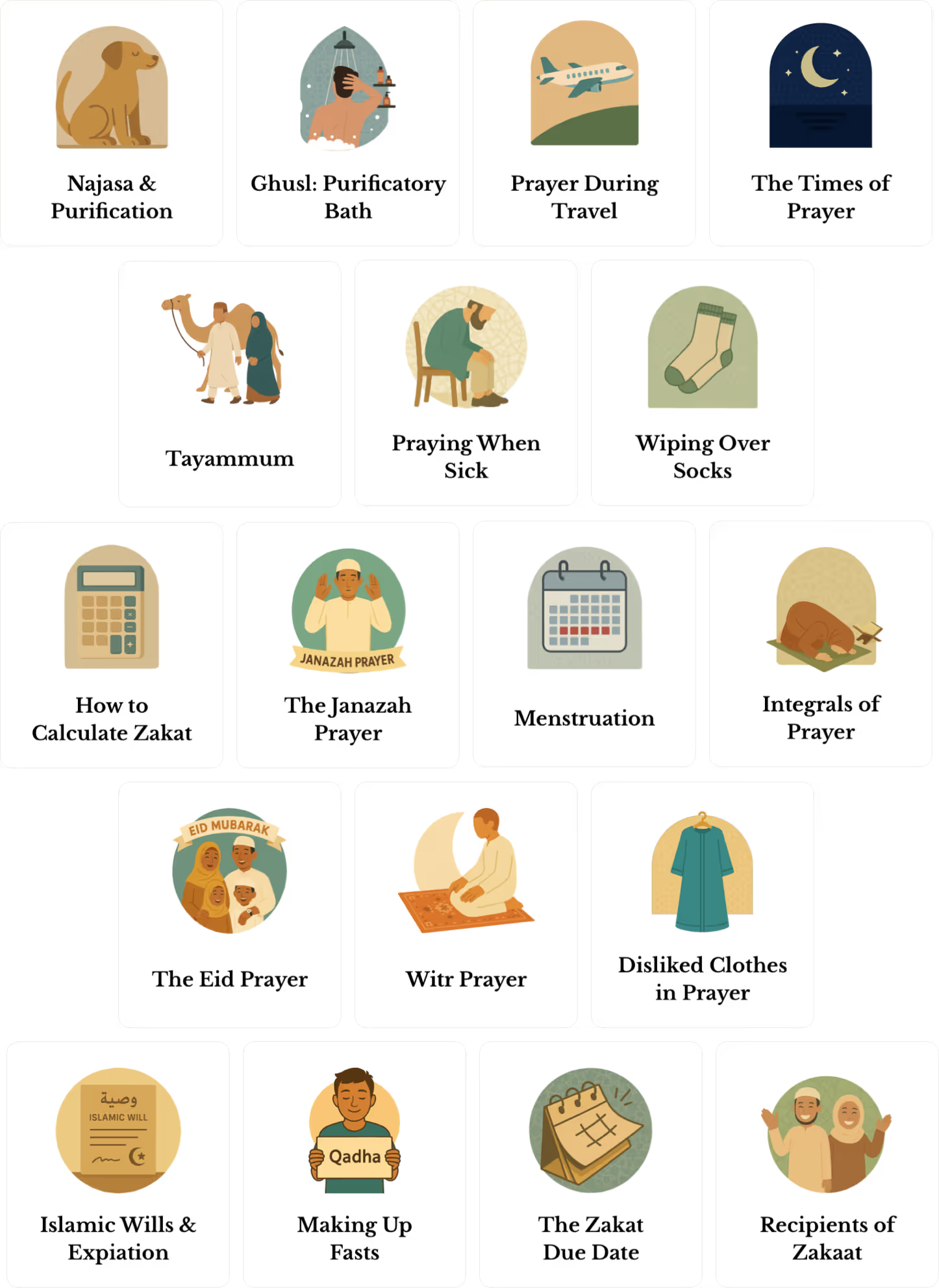
Cards showing examples of lessons inside the Jibreel app
Learn All You Need To Know in 5 mins a Day
Download app button for Google and ApplePractice with certainty
Scan QR
to Explore App
Know YOUR Basics?
Find Out In 60 Seconds
5 common questions EVERY Muslim should know.
I'LL RISK NOT KNOWING
CLOSE

Question 1 of 5Which of the following is a requirement for Ghusl to be valid?

Starting with Bismillah
Doing a complete wudu
Setting intention to do ghusl
Rinsing the nose
Wash the entire body 3x

Question 2 of 5Ahmed is from the UK and is visiting his family in Palestine for 3 weeks. How should he pray?

Shorten and combine prayers for the duration of the visit
Pray normally (not shorten or combine)
Shorten prayers up until 15 days then pray normally
Only shorten prayers during the journey. Pray normally upon arrival in Palestine.

Question 3 of 5What is the minimum distance a person must intend to travel to make them a traveller?

42 miles from their residence
42 miles outside their city boundary
48 miles from their residence
48 miles outside of their city boundary

Question 4 of 5You are a traveller according to Hanafi fiqh and are feeling energetic, how should you pray?

Pray the full four rakats
Shorten prayers to 2 rakats
Shorten prayers to 2 rakats and combine in one prayer time
Pray the full four rakats and sunnah prayers

Question 5 of 5You're praying salah at an airport and you lay your jacket with your wallet beside you. Your wallet only has £5 inside and you see someone taking your wallet. Can you break your salah to stop them?

Yes
No
Your Score: Urgent Attention ⚠️
0%

You're leaving your faith to guesswork. Don't risk your akhira.

Learn the essentials now - and worship with lifelong confidence.